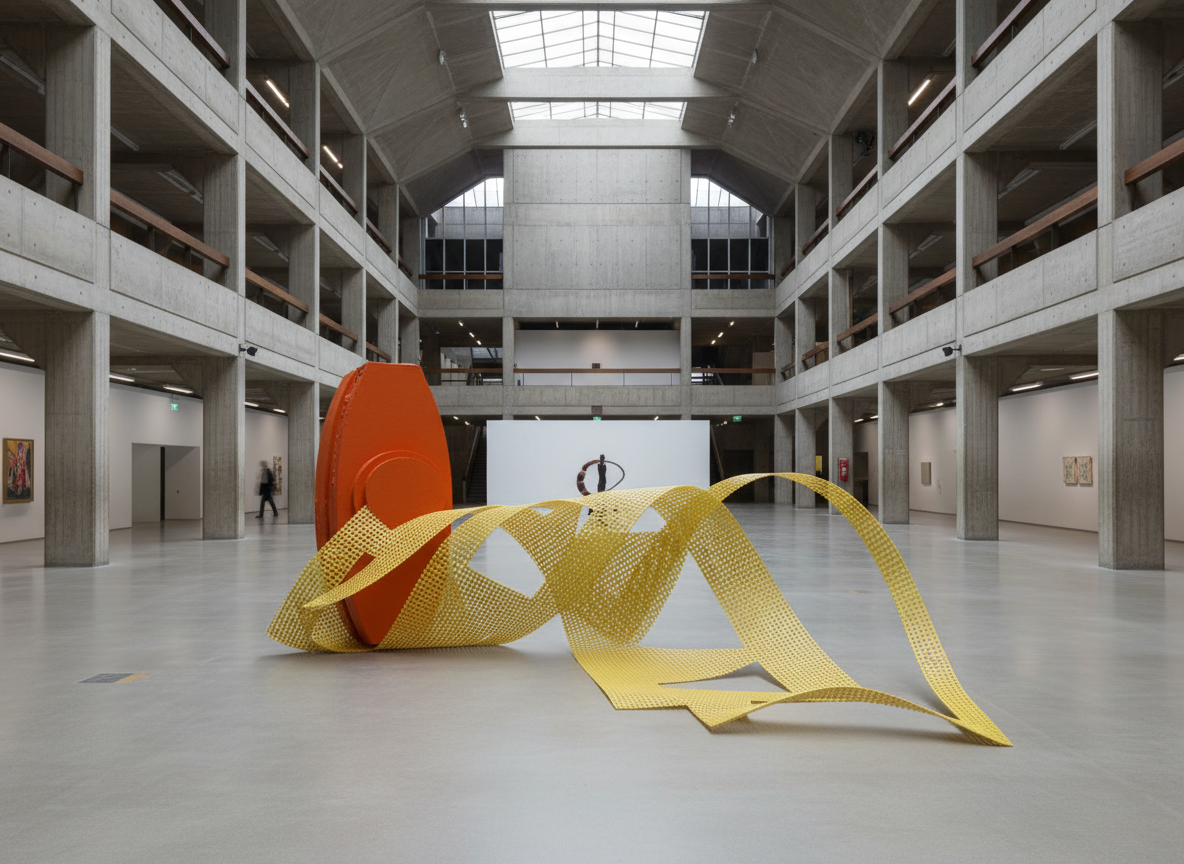
This project was never intended to resolve into a single finished object. Its purpose was to develop a set of structural capabilities — joining mechanisms that could support larger, more adaptable sculptural work while remaining legible, reversible and materially honest. By the end of the research, what emerged was not a catalogue of outcomes, but a framework for future making.
From Components to Systems
The joining mechanisms developed through this project function most effectively when understood as systems rather than individual parts. Each join carries decisions about tolerance, material behaviour, force and assembly and those decisions become increasingly significant as scale increases. The research has established a reliable foundation for extending these systems into larger configurations. Joins that performed consistently at a small scale can now be adapted, strengthened or multiplied to support more ambitious sculptural arrangements. This marks a shift from testing possibilities to building capacity.
Scale and Balance
One of the most significant outcomes of the research is an increased confidence in how joins can manage balance and load. Each failure along the way removed excess, pushing the joins toward structural clarity capable of carrying greater scale.The combination of cast materials and magnetic force opens up the possibility of standing structures, where components rely on both gravity and connection to remain stable. These balance points introduce a new spatial dynamic into the work. Joins are no longer hidden or secondary; they become moments of tension and resolution, actively shaping how a sculpture occupies space.
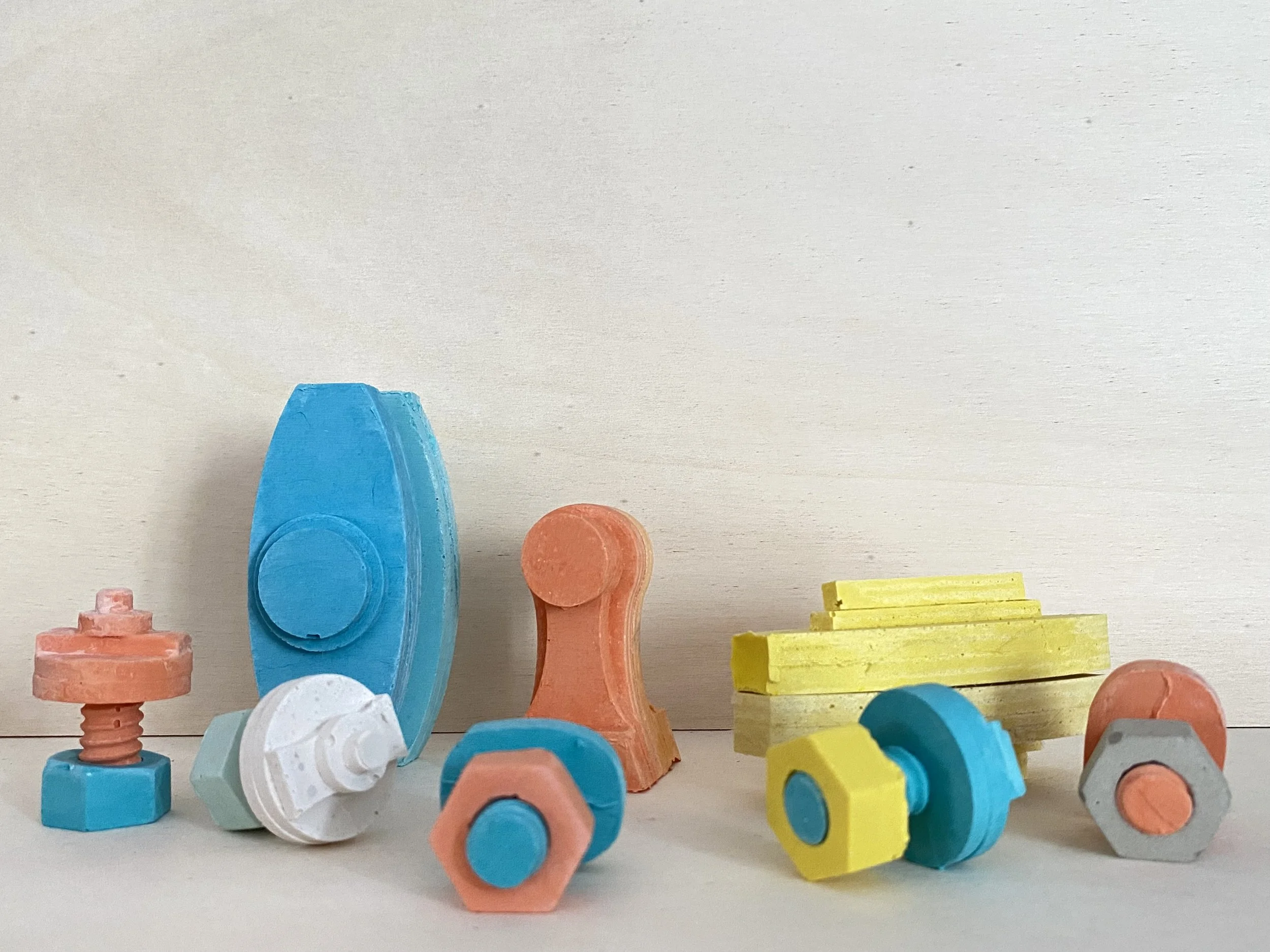
Cast joinery designs in concrete and Jesmonite.
Modular Display and Installation
The research also suggests alternative modes of display. Larger magnetic joins could function in ways similar to a French cleat system, allowing works to be assembled, disassembled and reconfigured across different sites without permanent fixings. This flexibility supports work that can respond to architectural context rather than remain fixed to a single format. Peg-based systems and modular hanging solutions offer further possibilities for adaptation, particularly in relation to non-traditional exhibition spaces.
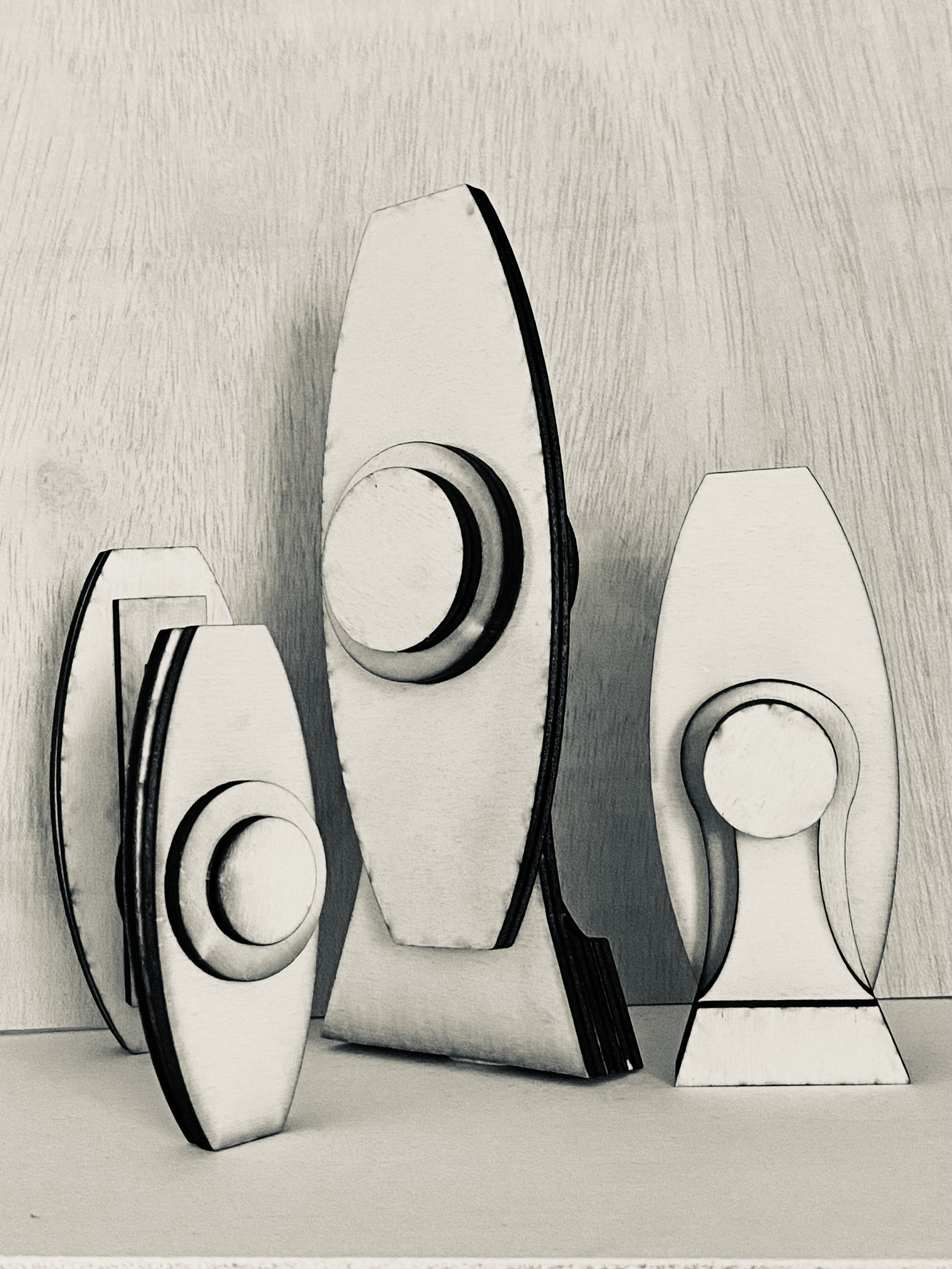
Scaled up joinery designs.
Integrating Lighter Materials
Another outcome of the research is the potential to integrate lighter materials such as paper, fabric or thin sheet materials into my sculptural systems. The joins developed here are capable of holding, tensioning or framing these materials without dominating them. This opens up a broader material vocabulary while retaining structural coherence. Light, shadow and movement can be introduced without undermining the architectural presence that underpins the work.
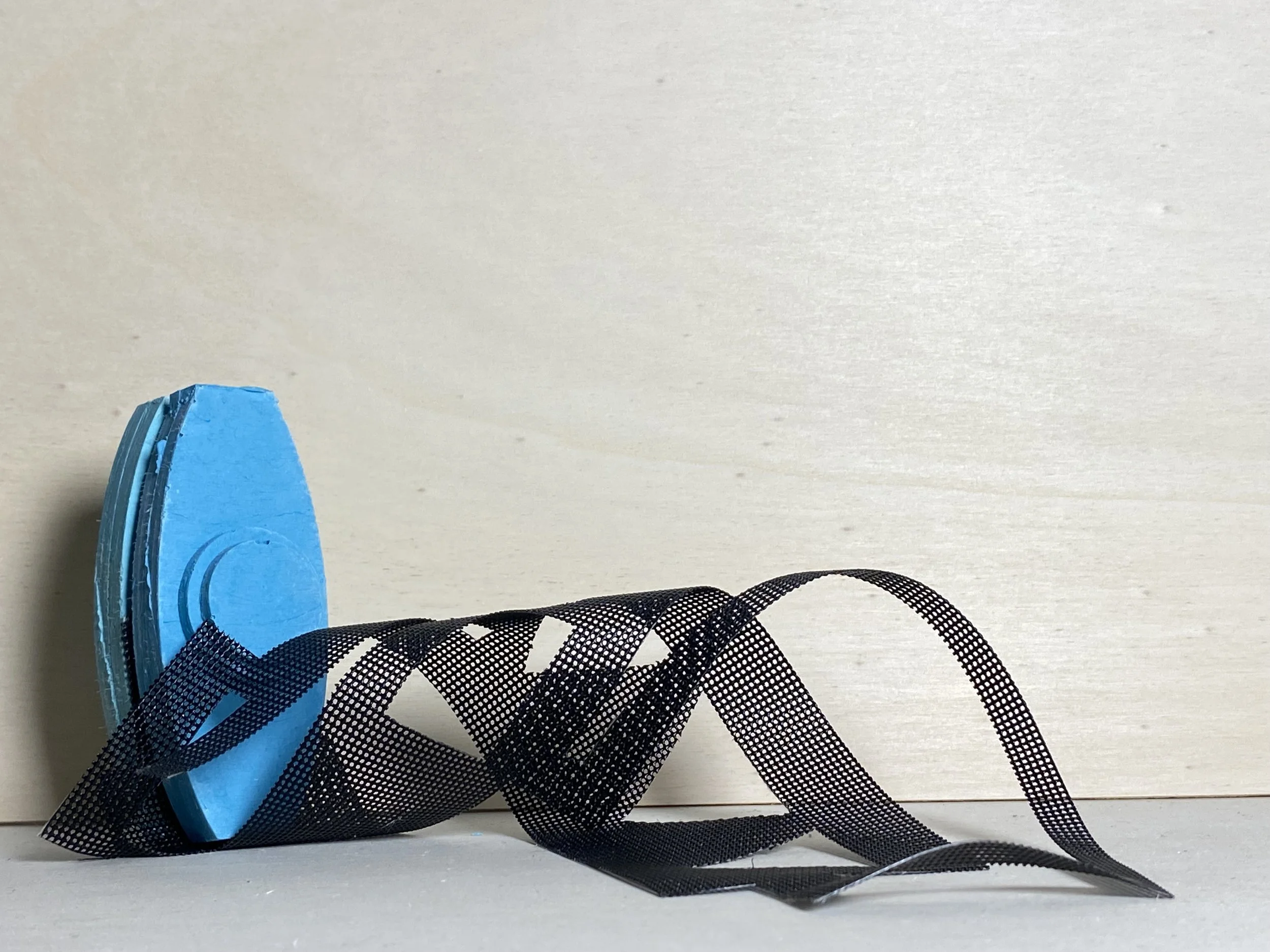
The hidden magnets allow lighter materials to be sandwiched between the two sections.
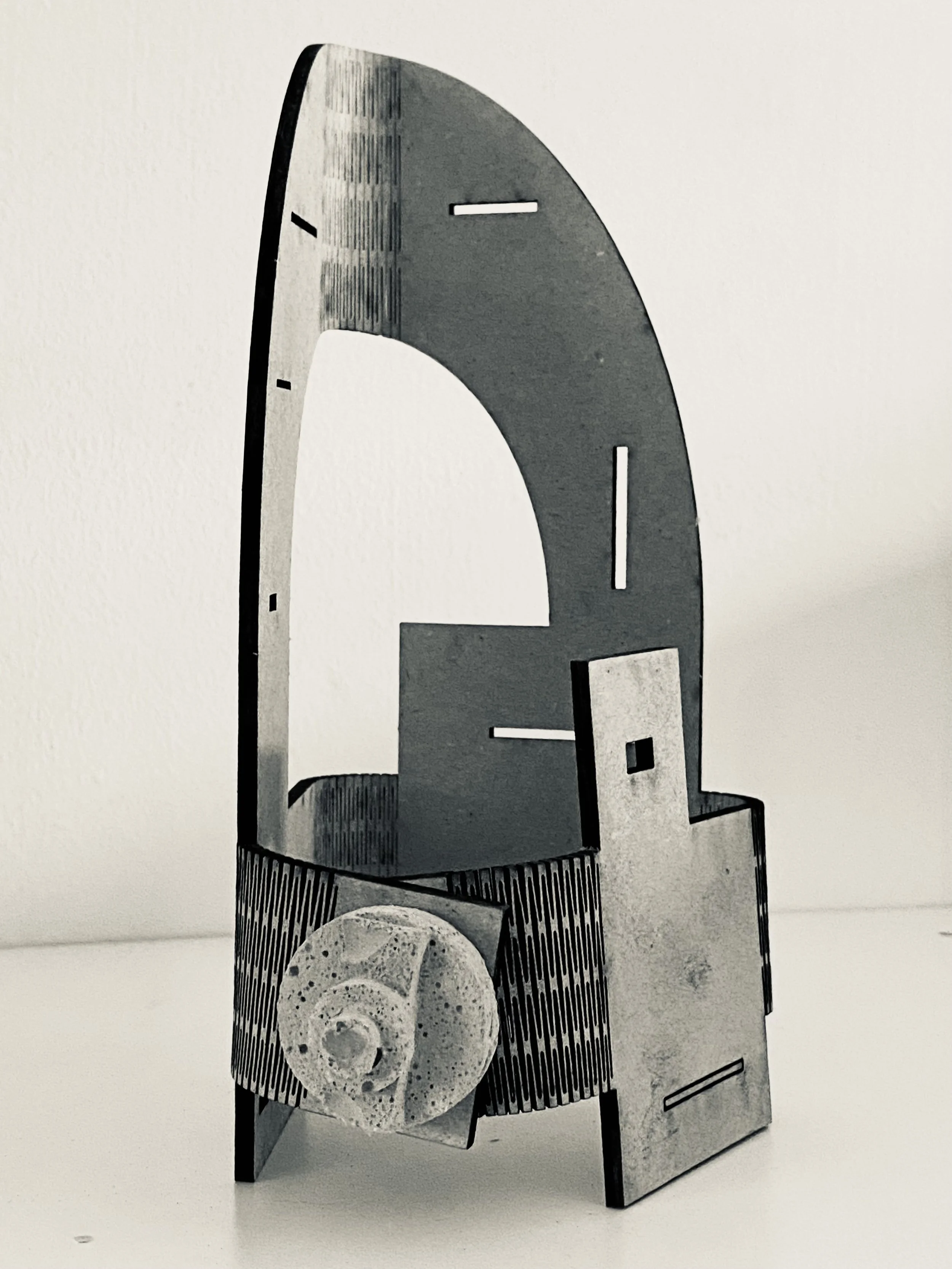
Cast concrete screw and bolt system in situ.
Research as Ongoing Practice
Importantly, this project has reinforced research as an integral part of my practice rather than a preliminary stage to be left behind. Failure, revision and constraint have not been obstacles to overcome, but mechanisms through which the work has gained clarity. The joins that continue forward from this research do so with an accumulated understanding of material behaviour, scale and trust. They are no longer speculative.

Imagined future possibilities using scaled up joinery designs as stand alone or grouped series of sculptures…
Closing the Loop
This body of research has established a set of tools — conceptual, material and structural — that will inform future sculptural work over the long term. It has created conditions for growth without prescribing outcomes, allowing the work to remain responsive and open while grounded in rigorous decision-making. The joint, once a practical problem, has become a generative element.