
January 2025
The project began with a problem: scale.
My existing modular works relied on stacking and slotted systems. They functioned, but they were structurally and conceptually limited. The joins held things together without carrying enough meaning. So I shifted the focus. The joint became the work.
January marked the start of a research-led phase supported by bursary funding. This was not about producing finished objects. It was about setting direction, identifying gaps and committing to structural development rather than short-term solutions.
Establishing Intent
The aim was not to replicate historical joints or disguise contemporary fixings behind nostalgia. The interest lay in the logic of traditional joinery — how it balanced strength, economy, repair and clarity — and how those principles might operate in sculpture using contemporary materials. This required research, not improvisation.
Research Ground
I began with the High Wycombe furniture archive, focusing on the 1960s–70s and examining:
G-Plan technical drawings, including Kofod-Larsen designs
Ercol joint systems
E. Gomme catalogues and promotional material
These materials revealed joinery designed for repeatability and structural clarity — principles aligned with the architectural weight underpinning my sculptural work.
Alongside studio research, mentoring with Rosalind Davis strengthened the articulation and positioning of the practice, ensuring the material development was matched by clearer language and direction.
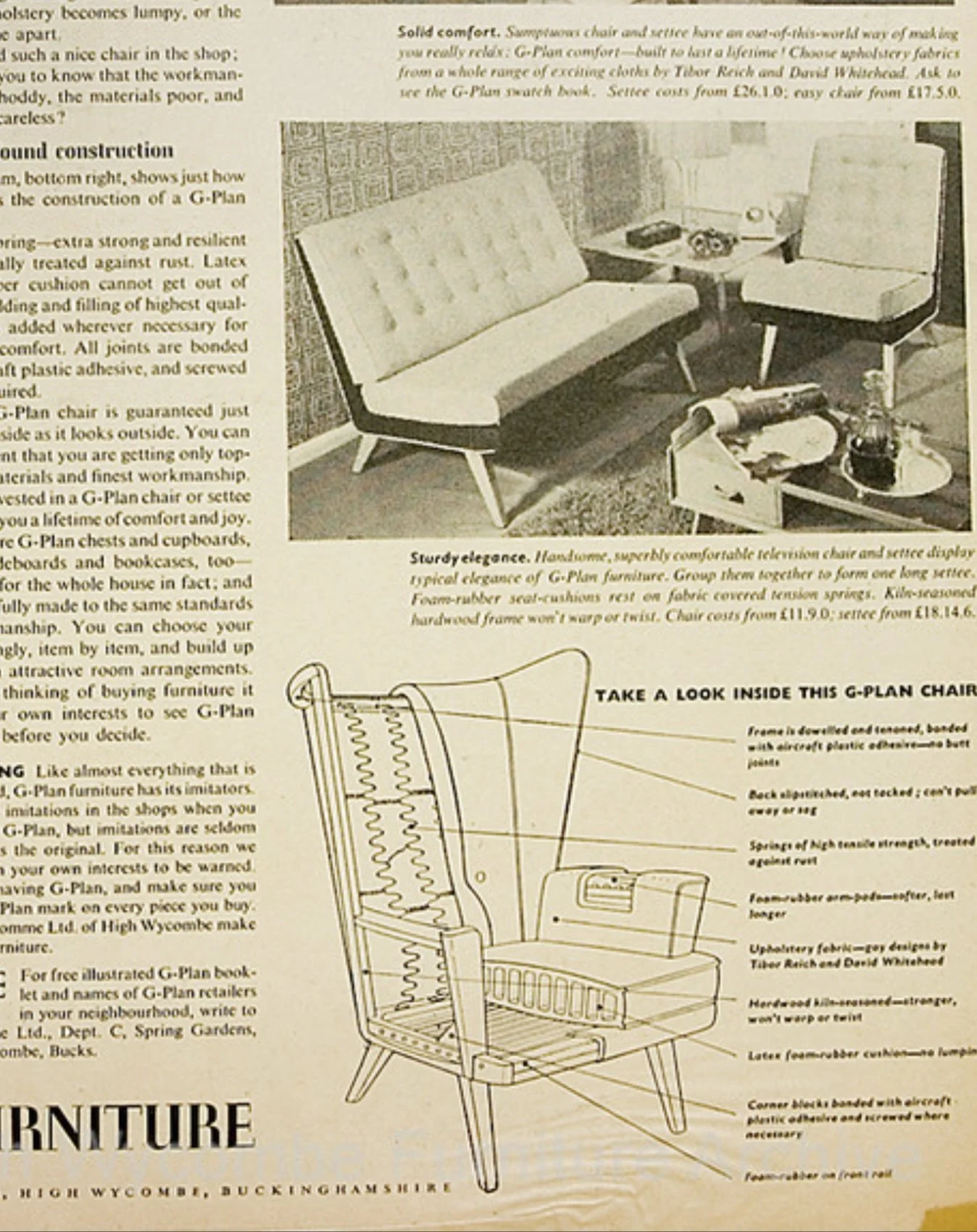
G-Plan technical drawings, including Kofod-Larsen designs
Ercol joint systems
E. Gomme catalogues and promotional material
These materials revealed joinery designed for repeatability and structural clarity — principles aligned with the architectural weight underpinning my sculptural work.
Alongside studio research, mentoring with Rosalind Davis strengthened the articulation and positioning of the practice, ensuring the material development was matched by clearer language and direction.
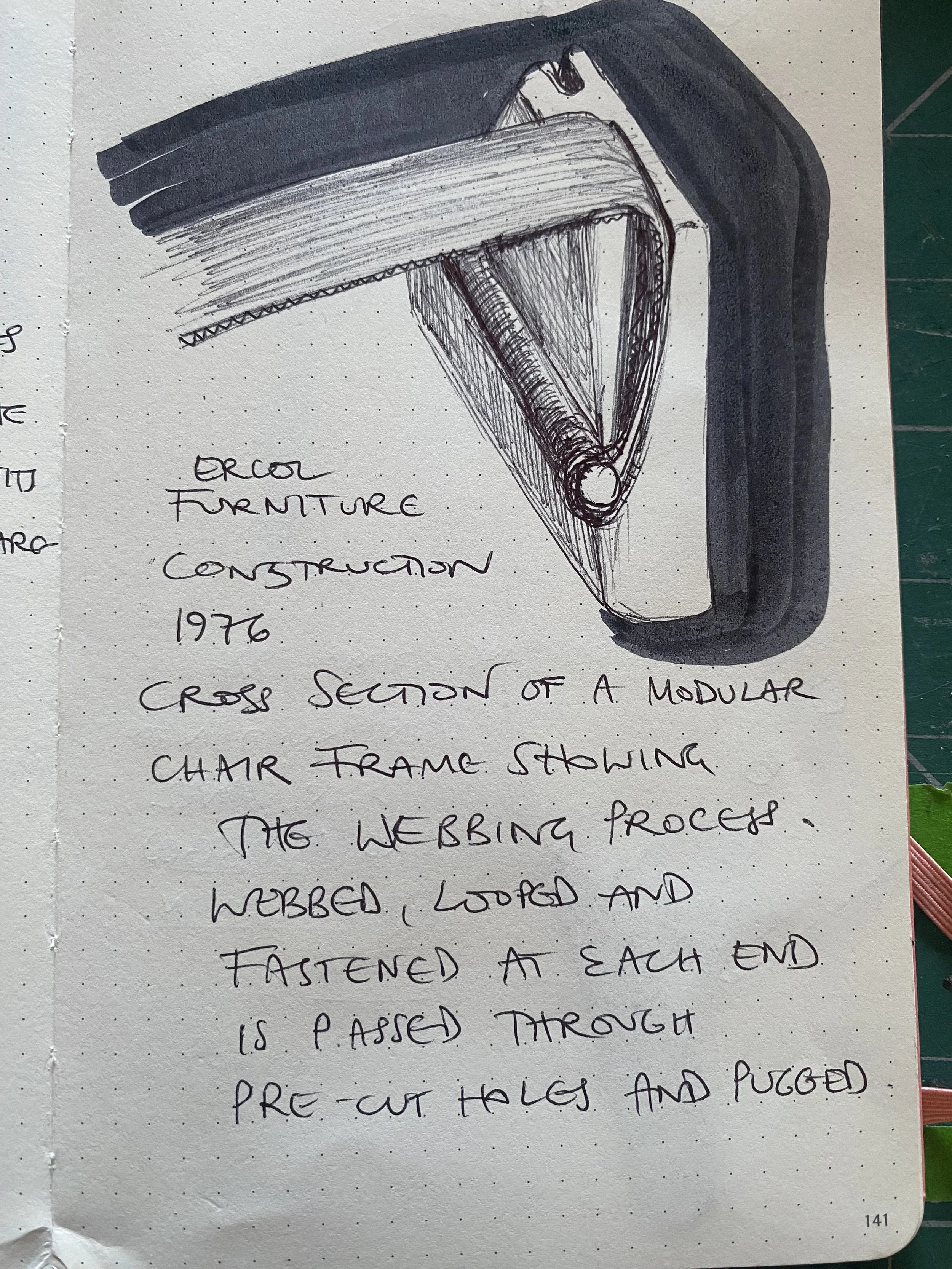
From Drawing to Prototype
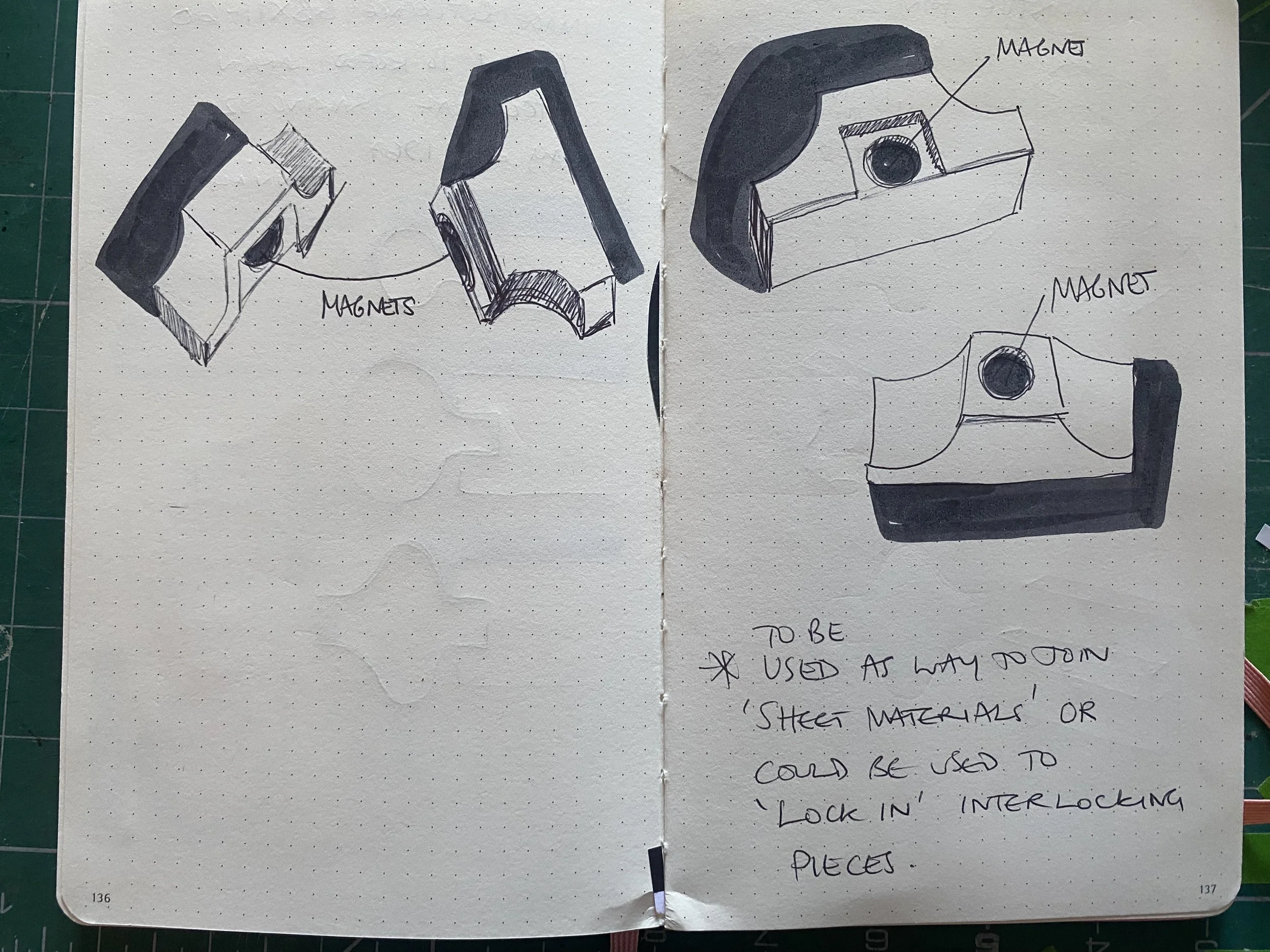
Initial responses took place in the sketchbook, testing force and direction rather than designing finished solutions. Two magnetic joining mechanisms began to emerge.
Drawings moved into Procreate as an extension of the sketchbook, then into Adobe Illustrator to generate SVG files for laser cutting. Each translation — hand to tablet, tablet to vector, vector to material — introduced constraints that exposed weaknesses early.
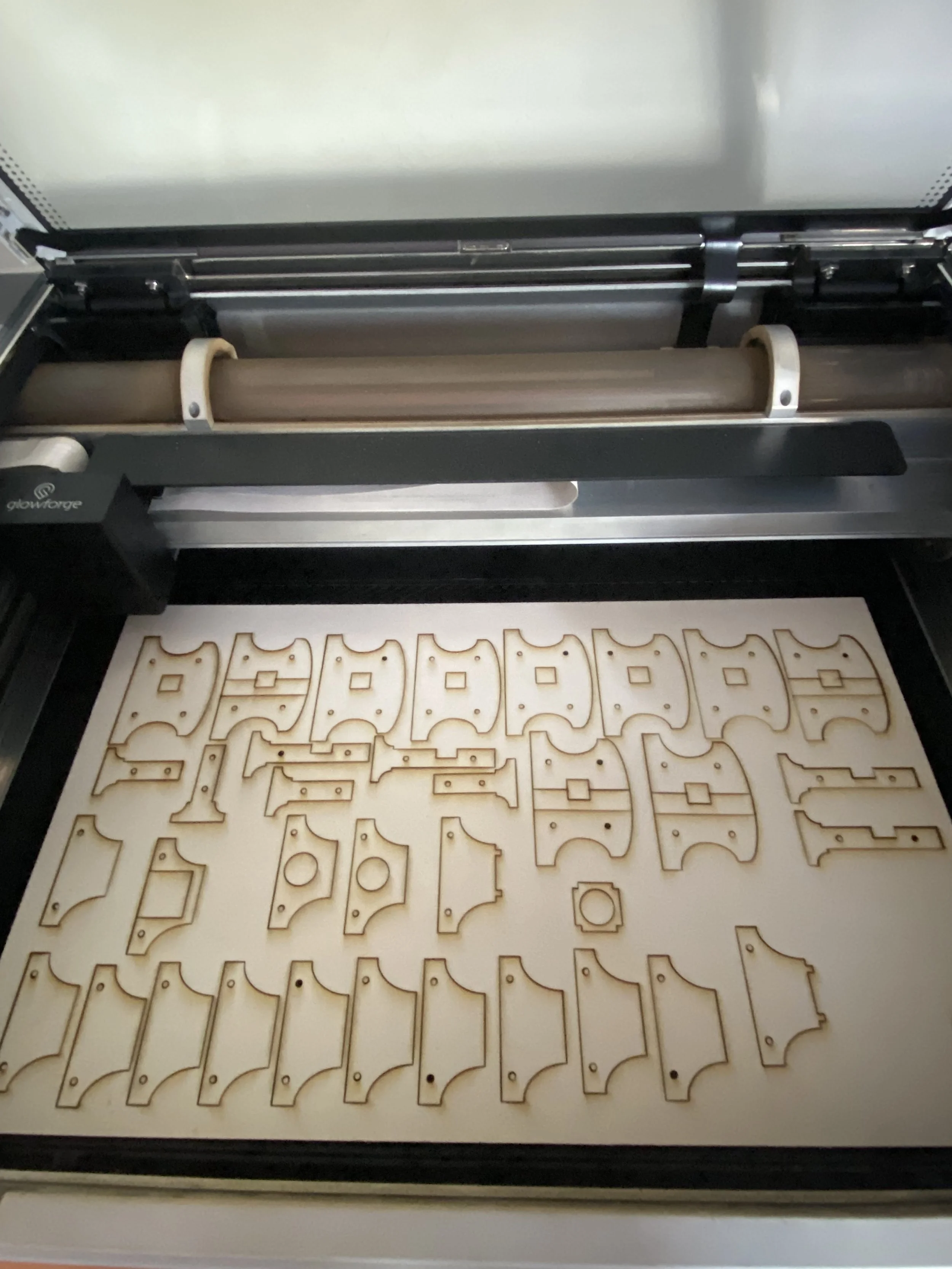
First designs using the laser cutter.
The prototypes were thinking tools. They clarified issues of tolerance and alignment before casting.
What This Stage Established
January defined the scope of the project and surfaced key questions around weight, material behaviour and scale. Those questions made the next step unavoidable: casting. Only through weight and failure could the join be properly tested.