
Jesmonite, Material Behaviour and Early Limits
February 2025
By February, drawing had reached its limit. The joins looked resolved on screen, but without weight they were still hypothetical.
I booked onto a two-day Casting & Sculpture in Jesmonite course with Dr Sarah Fortais. The course I originally intended to attend was full; rather than delay the project, I worked with what was available. Momentum mattered.
I arrived with a defined structural problem: how would a magnetic join behave once cast?
Entering Material With Intent
I brought a simple wooden prototype — a two-part form designed to lock modular sheets together. Its simplicity was deliberate. I wanted the material to expose weakness without distraction.
Jesmonite offered architectural presence without the density of concrete. It holds detail, carries pigment internally and registers surface precisely. It also reveals error immediately. Mix ratio, mould alignment and timing are visible in the final form.
Learning How Materials Push Back
Working with polypropylene moulds made scale and tolerance unavoidable. Small inaccuracies became structural consequences. A seam was no longer cosmetic; it altered alignment.
Colour shifted from aesthetic decision to structural consideration. Pre-mixing pigment into the liquid component ensured consistency. Surface and structure could not be separated.
Producing a small silicone mould reinforced the need for control in sealing, release and containment. Precision became non-negotiable.
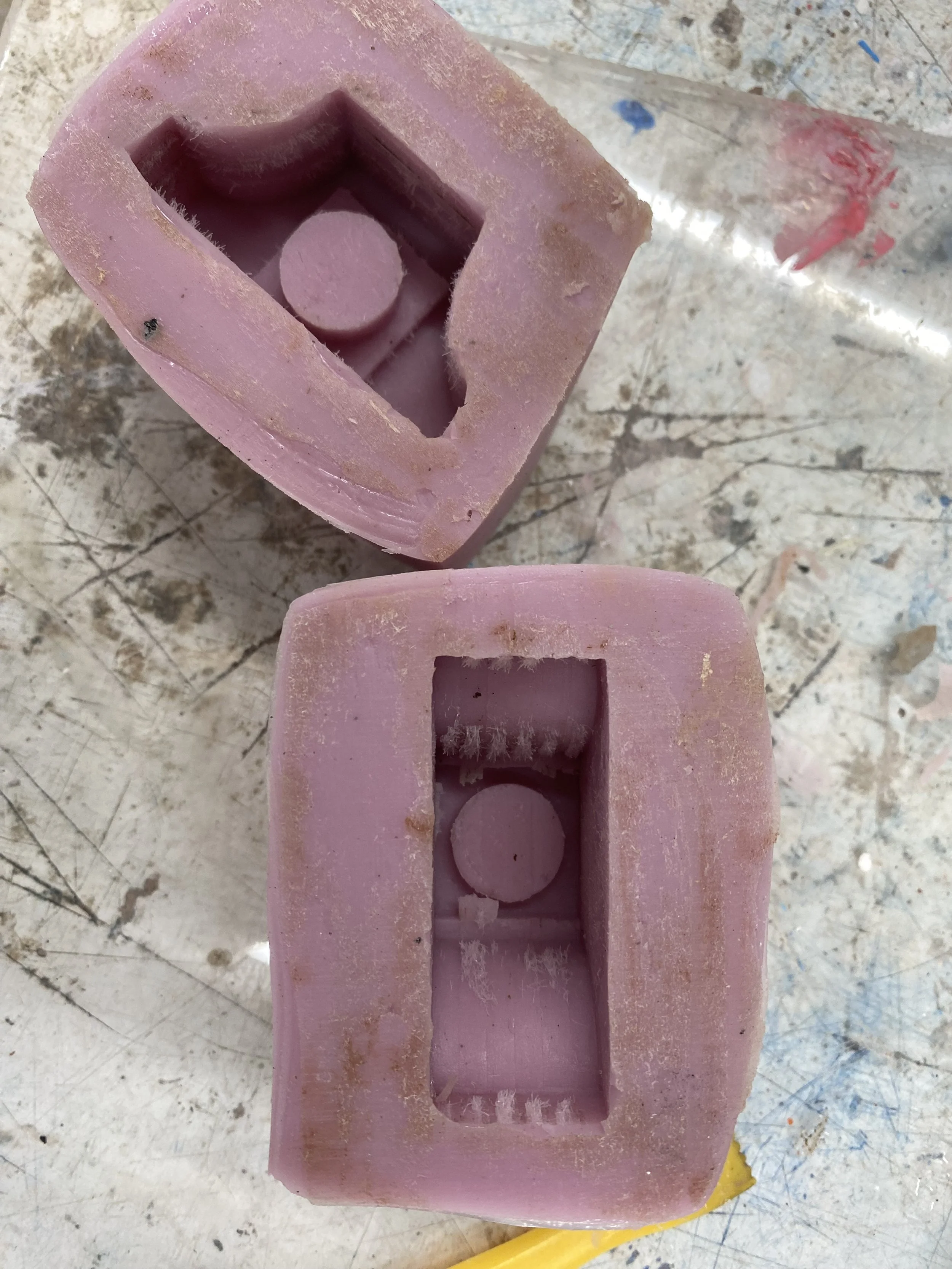
Casting, Finishing and Surface Decisions
Laminating allowed thin but strong forms. Hollow casting introduced concerns around edge strength and durability — essential for joins intended to be assembled repeatedly.
Finishing processes revealed another risk: overworking a surface diminishes its weight. The material holds presence best when handled with restraint.
Time constraints prevented full testing of acid etching, clarifying a direction for further experimentation.
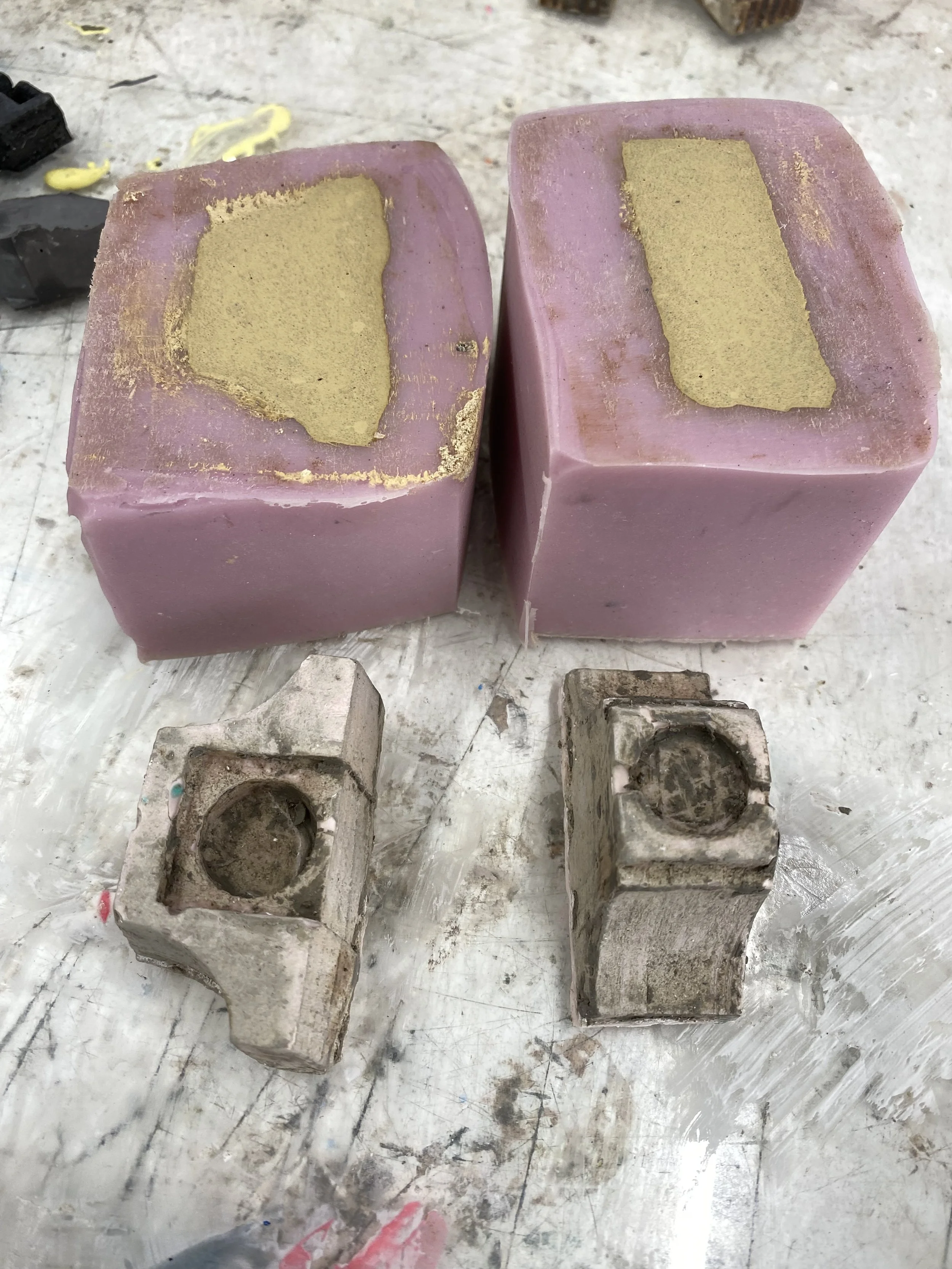
What This Stage Revealed
Jesmonite does not tolerate indecision. Minor errors are amplified — particularly in components that must align precisely or house embedded magnets. The material demanded clarity. It also exposed waste, encouraging a more economical approach to casting and mould-making.
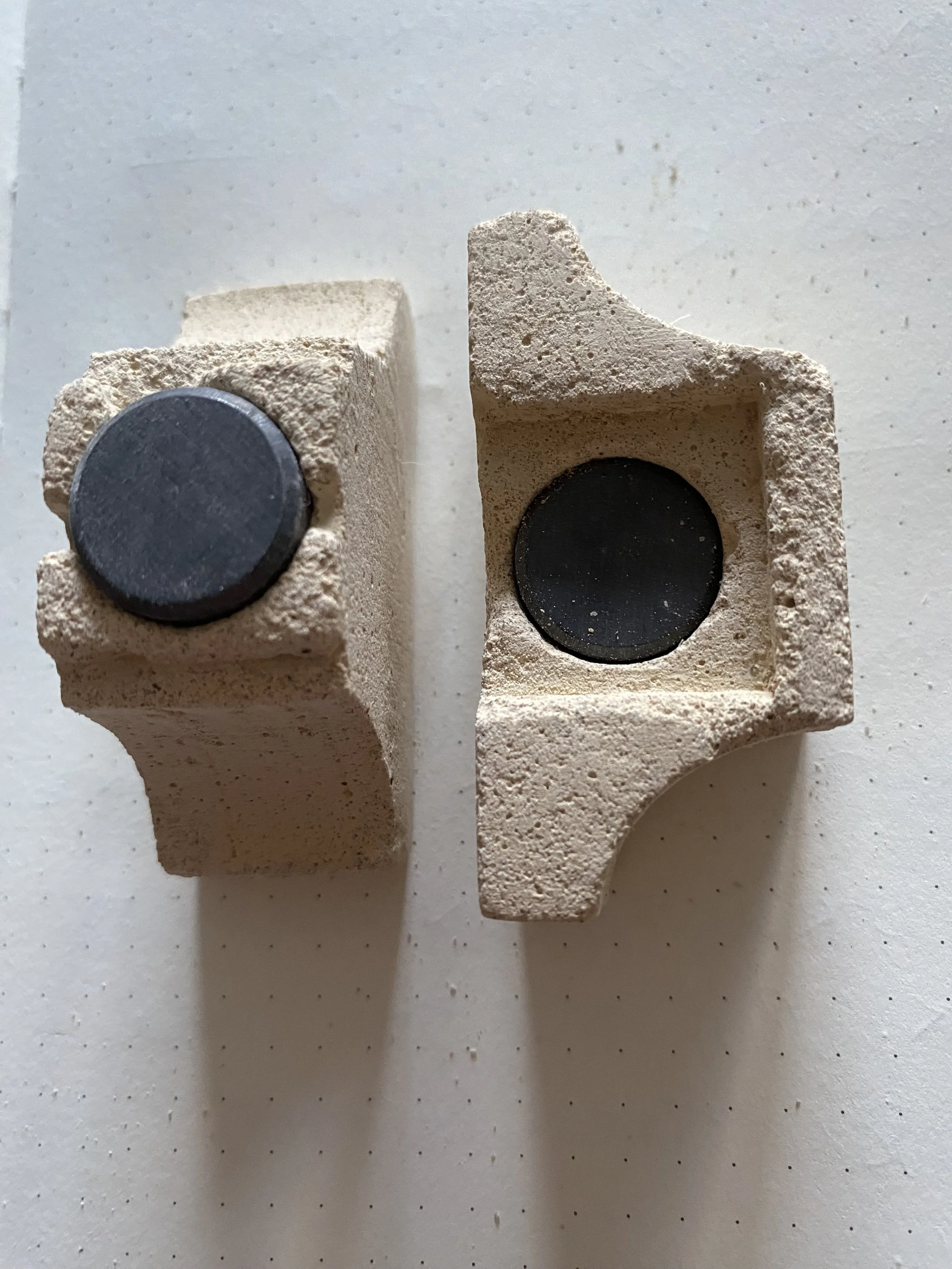
What This Stage Established
Casting introduced consequence. Weight replaced speculation.
The joins now had to withstand gravity, repetition and force.
From this point forward, ideas would be tested materially, not imagined.