
Silicone Mould-Making and the End of Illusion
Laser cutting exposed digital limits. Mould-making removed any remaining illusion of control.
This stage focused on producing silicone moulds for the laser-cut join components, aiming to create cast elements capable of repeated handling and assembly. Unlike cutting, mould-making fixes decisions. Geometry, thickness and alignment become consequences.
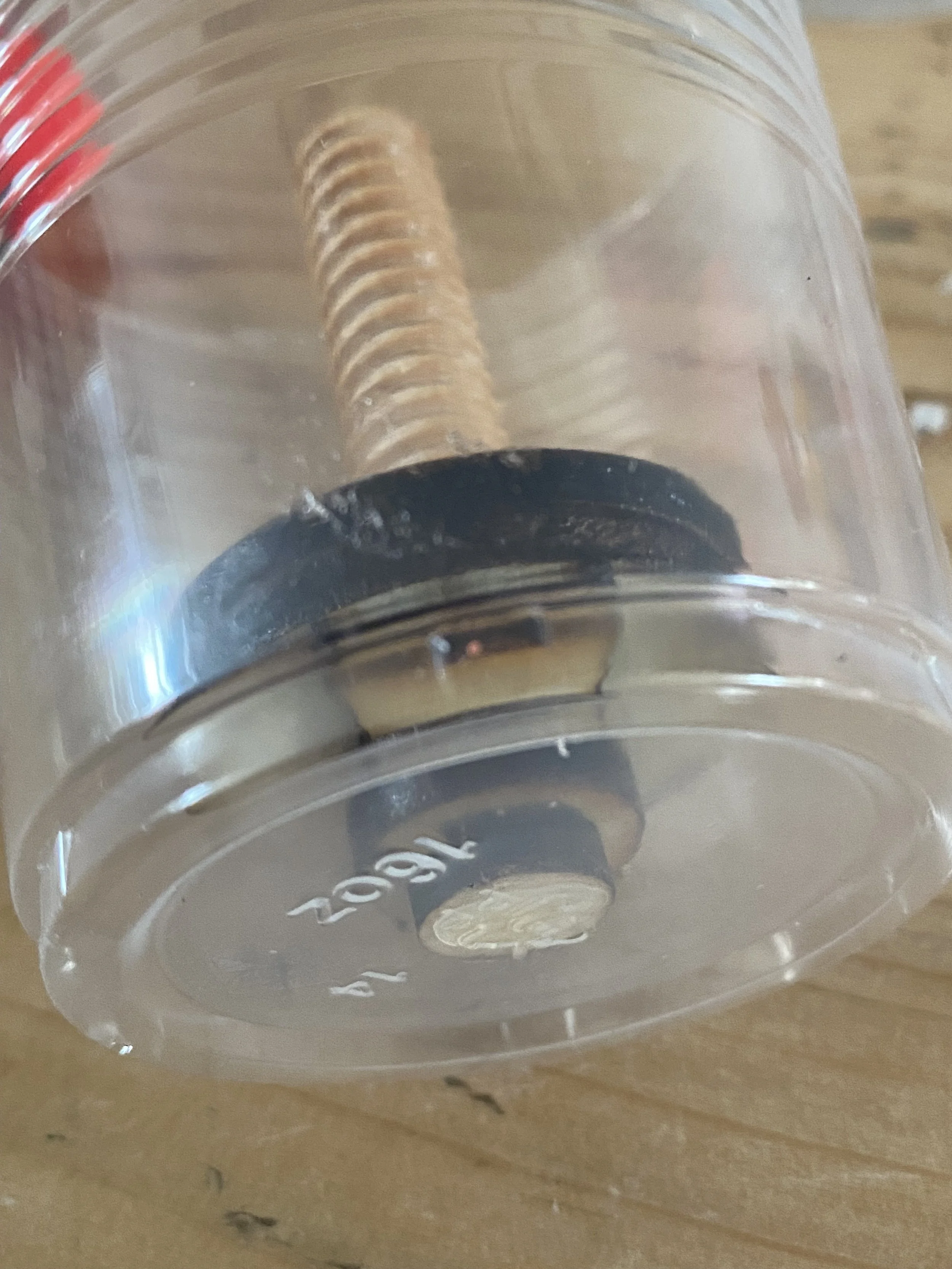
Silicone as an Active Material
Silicone is not neutral. Flow, cure time, flexibility and tear strength actively shape the outcome.
Early moulds exposed unresolved design issues. Sharp internal corners created weak points. Undercuts caused tearing during demoulding. Thin walls flexed, reducing consistency across casts.
These were not technical errors. They were structural decisions made visible.
The Problem of Complexity
Multi-part joins proved demanding. Each added plane increased the risk of failure. Some moulds tore outright. Others distorted enough to render casts unusable.
This forced simplification. The question shifted from Can this be moulded? to Is it worth moulding?
Mould-making became a filter. Only joins capable of surviving repetition remained.
Learning Through Abandonment
Time invested in drawing and cutting did not guarantee survival. Some designs required disproportionate effort for minimal structural gain.
Letting them go clarified the project’s priorities. The aim is not to realise every idea, but to identify which ones justify continuation.
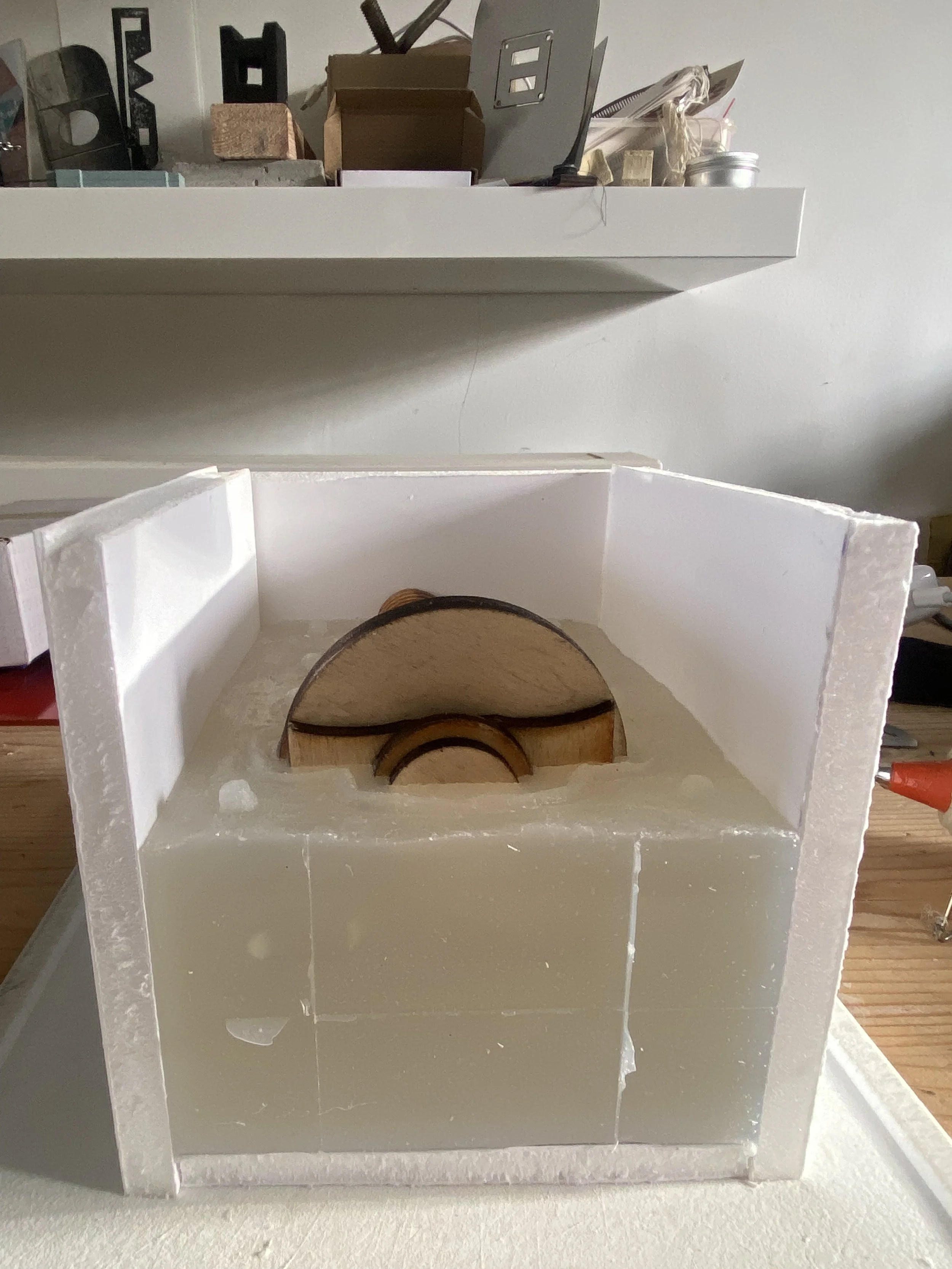
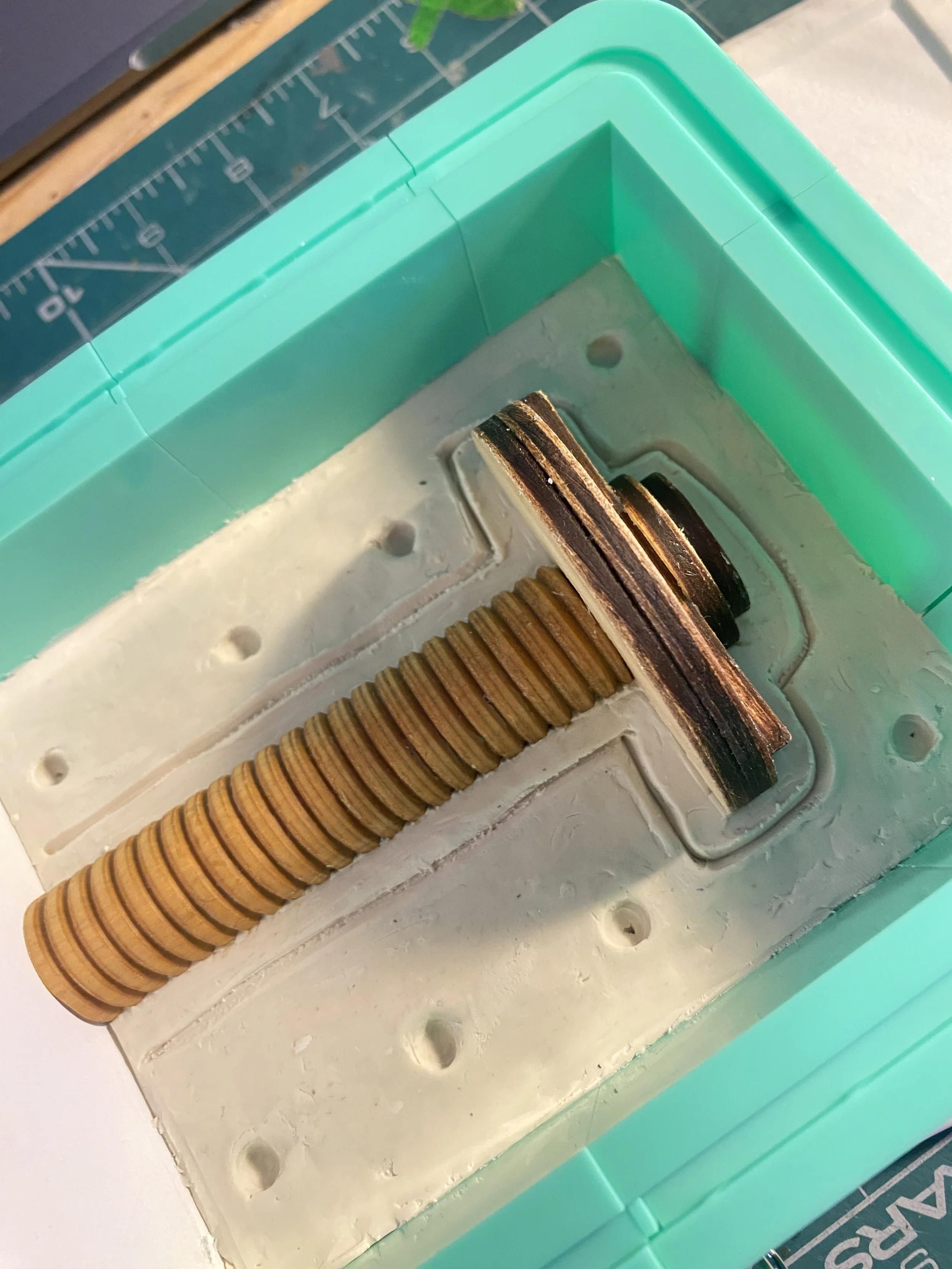
Precision as Discipline, Not Perfection
Precision in mould-making is not flawlessness; it is consistency.
Sealing, release agents and wall thickness made measurable differences. Rounding edges, adjusting split lines and increasing depth often determined success.
These adjustments did not simplify the process. They made it intentional.
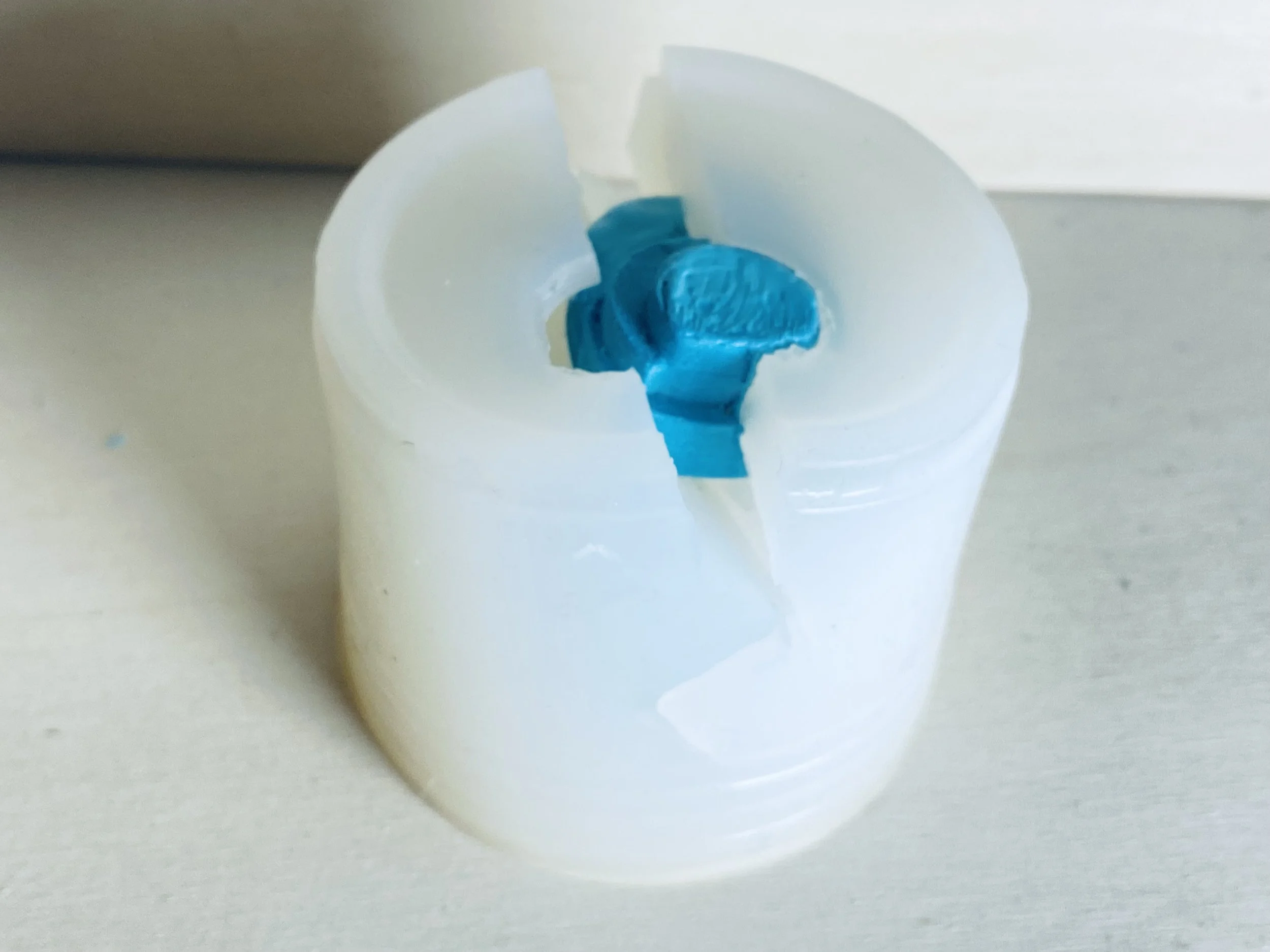
What This Stage Established
This phase clarified:
which geometries withstand mould-making
how silicone behaves under stress and repetition
where simplification strengthens the work
why mould considerations must shape design from the outset
Fewer joins survived, but they were structurally stronger and ready for casting.
Setting Up Casting
With workable moulds established, the project returned to casting under clearer conditions. Weight, surface and durability would now apply new pressure.
Mould-making narrowed the field. What remained was tested, not assumed.